

When November temperatures drop across Ontario, starting your vehicle can sometimes greet you with an unexpected sharp sound from beneath the hood. That brief screech or squeal usually vanishes after a few minutes of driving, leaving many drivers wondering if it requires immediate attention. Understanding what happens under the hood during a cold start helps you keep your daily commute reliable all season long. As a family-owned shop on Barton Street East, we frequently help local drivers diagnose seasonal noises as the weather turns frosty. Serving Hamilton drivers for over 20 years, we know that sudden temperature swings put extra strain on rubber components and rotating parts. Whether you commute from Ancaster, Dundas, or Burlington, listening closely to your engine during the first few minutes of operation offers important clues about its overall health.
01. Belt Slip Versus Pulley Friction
The most common culprit behind a morning squeal is accessory drive belt slip. Rubber belts stiffen significantly when outdoor temperatures plummet below freezing. When you first turn the ignition, the alternator, power steering pump, and water pump demand power from a stiff, cold belt that cannot immediately grip the rotating pulleys smoothly. This momentary friction creates a high-pitched squeal until the rubber warms up and regains its natural flexibility.
Sometimes, however, the noise stems from the pulleys themselves rather than the belt material. Bearings inside the alternator, idler pulleys, or tensioners rely on internal grease that thickens in cold weather. When that grease loses its fluidity, the bearing spins with increased resistance until friction generates enough heat to soften the lubricant. If the squeal turns into a continuous chirp or a deep rumble, a failing bearing is usually the root cause rather than simple belt tension.
Inspecting Your Drive Belts
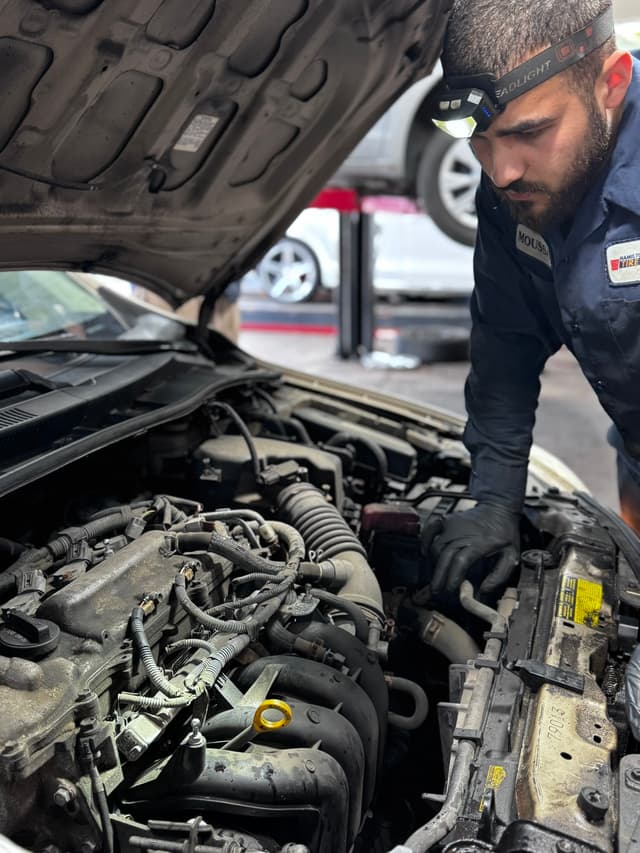
You can perform a quick visual check under the hood after turning off the engine and letting it cool completely. Look closely at the ribs of the accessory belt for dry cracking, splitting, or glazing on the shiny side. If the rubber looks worn or frayed, it is time to have a technician replace the component before it snaps on the highway.
Checking Pulley Alignment
Another item to observe is whether the belt rides evenly within the pulley grooves. If a tensioner loses its spring strength, the belt can drift slightly sideways, creating uneven wear and persistent noise. Maintaining proper tension protects other vital systems, which is just as important as scheduling regular oil change appointments to keep internal engine components well lubricated during winter.
02. Professional Diagnostics in Hamilton
Pinpointing the exact source of a cold weather squeal requires a trained ear and the right tools. At our shop, we inspect the entire front-end accessory drive system to determine if you simply need a new belt or a replacement tensioner pulley. Ignoring a persistent squeal can lead to a snapped belt, which instantly disables your charging system and power steering.
Beyond belt and pulley checks, cold weather often impacts other vehicle dynamics. Drivers frequently notice handling shifts when the temperature drops, making it a smart time to check your suspension or verify that your tires track evenly with a computerized wheel alignment. Keeping every system working in harmony prevents minor seasonal noises from turning into major roadside headaches on snowy streets.
03. Frequently asked questions
Why does the squealing noise stop after driving a few kilometres?
The noise usually stops because friction quickly warms up the rubber drive belt and the internal bearing grease. Once these components reach their normal operating temperature, the rubber regains its grip and the pulleys spin freely without slipping.
Can I spray household lubricant on the belt to stop the noise?
Applying household oils or sprays to a drive belt is strongly discouraged because lubricants cause the rubber to slip further and degrade rapidly. The correct fix is replacing a worn belt or adjusting the tensioner properly.
How long does a belt inspection take at your shop?
An accessory drive belt inspection takes only a few minutes, allowing our team to quickly assess its condition and let you know if a replacement is necessary.
To get your vehicle inspected before the next deep freeze, contact us to book an appointment or call us directly at (905) 547-1234 today.
Photo: Anurag Jamwal / Pexels
"Hear a squealing noise under your hood on chilly mornings? Learn why cold weather causes belt slip and pulley friction for Hamilton and Stoney Creek drivers."
In conclusion, staying on top of your vehicle's maintenance ensures longevity and performance. Addressing issues as soon as they arise keeps your vehicle running smoothly for years to come.
Discussion (0)
Loading comments...
Leave a Comment