

When late autumn temperatures start dropping near zero across southern Ontario, your vehicle relies heavily on its cooling system to regulate engine heat. A tiny, undetected coolant leak might seem harmless during milder months, but freezing weather turns moisture into solid ice that can crack engine blocks. Catching these slow leaks early gives you time to address minor fluid service issues before a sudden freeze leaves you stranded on your morning commute.
01. Checking Your Coolant Levels Safely
The easiest way to start is by checking the coolant overflow reservoir when your engine is completely cold. Never open a hot radiator cap, as pressurized hot fluid can cause severe burns. Look at the plastic tank on the side of your engine bay and find the minimum and maximum fill lines. If the pink, green, or orange fluid sits below the minimum mark, you are losing fluid somewhere in the system. Beyond fluid levels, pay close attention to unusual scents around your vehicle. Coolant contains ethylene glycol, which produces a distinct, sweet smell whenever a tiny drop hits a hot engine component or escapes onto your driveway in Hamilton.
02. Inspecting Hoses and Connections
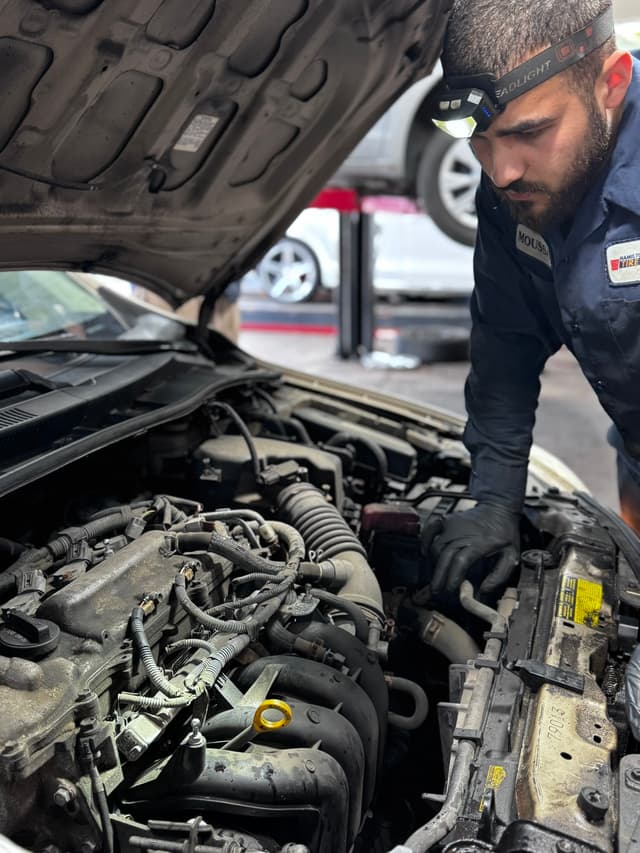
Rubber hoses carry coolant back and forth between the radiator and the engine block, enduring extreme temperature swings every time you drive. Pop your hood and use a flashlight to inspect these flexible hoses for soft spots, bulges, dry cracking, or white crusty residue around the metal spring clamps. A slow leak often weeps past a loose clamp or a microscopic split in the rubber, evaporating quickly before it can pool on the pavement. If you notice damp spots along the underside of the radiator or near the water pump, it is wise to schedule professional oil change or general maintenance checks. Ignoring these minor damp patches can lead to complete fluid loss once sub-zero morning temperatures set in around Stoney Creek and Ancaster.
03. Why Winter Preparation Matters
Coolant does much more than prevent summer overheating; it contains vital chemical additives that stop internal corrosion and lower the freezing point of water. If your coolant mixture becomes too diluted with plain water over the years, the liquid inside your block will freeze solid when the thermometer plunges. Along with checking your fluid, ensuring your tires have proper tread depth and booking a wheel alignment helps keep your daily driver handling safely on slick winter roads. Taking care of your cooling system now prevents emergency repairs later in the season.
04. Frequently asked questions
What does a coolant leak smell like?
A coolant leak has a distinctly sweet, syrupy odour that you might notice immediately after parking your car or while running the cabin heater. If you catch that sweet scent under the hood around Burlington or Dundas, schedule a check right away.
Can I just add water to my coolant reservoir?
Adding a small splash of water is acceptable in an absolute emergency to get you to the shop, but it dilutes the crucial anti-freeze protection. Your engine needs a precise balance of water and antifreeze to withstand freezing temperatures safely.
Where is your shop located?
We are a family-owned shop on Barton Street East, proudly serving Hamilton drivers for over 20 years with honest, straightforward automotive advice.
Drop by our shop at 1250 Barton St E, contact us online, or call our team directly at (905) 547-1234 to talk through any unusual under-hood smells or fluid drops before winter weather arrives.
Photo: Kampus Production / Pexels
"Spotting a slow coolant leak before winter helps protect your engine. Learn simple checks for sweet smells and low fluid levels with your local Hamilton shop."
In conclusion, staying on top of your vehicle's maintenance ensures longevity and performance. Addressing issues as soon as they arise keeps your vehicle running smoothly for years to come.
Discussion (0)
Loading comments...
Leave a Comment