
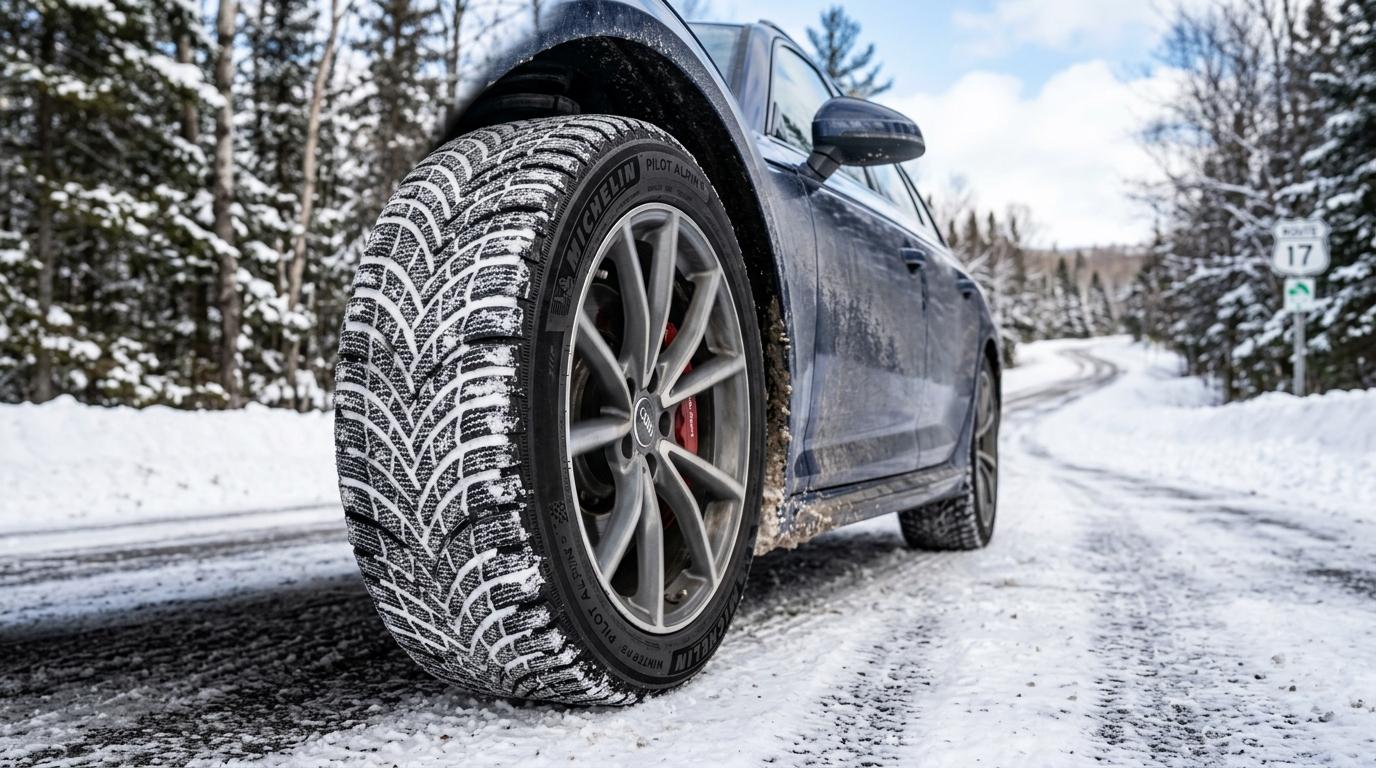
Timing your winter tire swap in Hamilton is essential for safety. Discover why the 7°C rule matters, legal and insurance benefits in Ontario, and how sub-zero temperatures impact rubber compound elasticity.
01. The 7°C Rule: Why Temperature Matters More Than Snow
All-season tires begin losing elasticity and gripping power as soon as ambient temperatures drop below 7°C (45°F). Winter tire compounds remain flexible, ensuring shorter stopping distances even on dry cold asphalt.
02. 3-Peak Mountain Snowflake (3PMSF) vs All-Season Tread
Tires bearing the 3PMSF symbol meet rigorous snow traction requirements. Deep sipes and flexible silica polymers pump slush away and bite into ice far more effectively than standard all-season designs.
03. Tire Pressure Swings in Sub-Zero Ontario Weather
For every 5°C drop in temperature, tire pressure drops approximately 1 to 2 PSI. Driving on under-inflated winter tires accelerates shoulder wear and decreases fuel efficiency.
"Cold weather turns all-season rubber into hard plastic. Switching at 7°C keeps your stopping distance short and your family safe."
In conclusion, staying on top of your vehicle's maintenance ensures longevity and performance. Addressing issues as soon as they arise keeps your vehicle running smoothly for years to come.


Discussion (0)
Loading comments...
Leave a Comment