

When freezing temperatures hit our region, an aging car battery often reveals its weakness right when you need it most. Cold weather thickens engine oil and drains battery power, making dependable starting a challenge for drivers across Hamilton and Stoney Creek. Taking a proactive approach to your vehicle's electrical components helps prevent frustrating breakdowns on icy mornings.
01. Checking Your Battery Terminals and Posts
Corrosion on battery terminals acts like a roadblock for electrical current, preventing the starter from getting the power it needs. Pop your hood and inspect the positive and negative posts for a powdery white or blue buildup. If you spot residue, a wire brush and a simple mix of baking soda and water can clean the connections safely. Make sure the battery hold-down clamp is secure so the battery does not shift around during daily commutes. If your electrical accessories seem sluggish, a proper test through our electrical service can determine if the battery itself is holding a proper charge.
02. Understanding Starter and Alternator Health
Your battery is only half the starting equation; the starter motor and alternator must also be in top shape. The starter relies on a strong electrical surge to crank the engine, while the alternator replenishes the battery while you drive. If you hear a rapid clicking noise when turning the key, your starter may be struggling from low voltage or internal wear. Meanwhile, dimming headlights or flickering dashboard lights while driving often point toward a failing alternator. Keeping these systems maintained ensures reliable operation through every cold snap.
03. Inspecting Wires and Fuses Before Snow Arrives
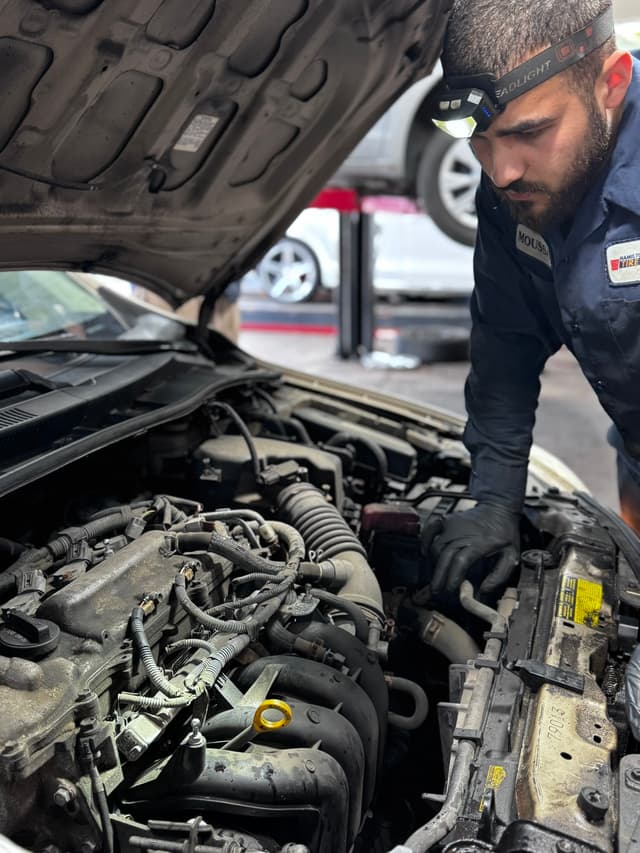
Electrical wiring and fuses handle the heavy lifting for your heater, defroster, and headlights during winter drives. Inspect visible wire harnesses under the hood for cracks, fraying, or damage caused by moisture and salt. Check your fuse box to ensure all interior and exterior fuses are intact and rated for the correct amperage. A blown fuse often points to an underlying short circuit that requires professional diagnosis before it leaves you in the dark. Keeping these circuits clean and dry prevents unexpected electrical glitches on your daily commute.
04. Essential Maintenance Steps for Winter Driving
Beyond checking the battery and charging components, a few simple checks can keep your vehicle running smoothly all season. Inspect accessory drive belts for cracks or fraying, as a slipping belt prevents the alternator from charging the battery efficiently. Test all exterior lights, turn signals, and the rear defroster so you maintain clear visibility during dark winter evenings. Pairing these checks with a routine oil change ensures your engine turns over easily when the temperature drops well below zero.
05. Frequently asked questions
How often should a car battery be tested in cold climates?
It is wise to test your battery before winter weather sets in, especially if it is more than three years old. Extreme cold reduces overall cranking power significantly.
Can I jump-start a frozen battery safely?
Never attempt to jump-start a battery that shows signs of cracking or bulging ice. A frozen battery can rupture, so it must be thawed or replaced safely.
What are the main signs of a failing alternator?
Warning signs include a battery warning light on your dash, unusually dim headlights at idle, and electrical accessories failing to operate properly.
For trusted guidance on winter vehicle readiness, visit our family-owned shop on Barton Street East. You can reach our team at (905) 547-1234 or contact us to schedule a visit.
Photo: Atlantic Ambience / Pexels
"Prepare your vehicle for freezing temperatures with proactive checks on your battery, alternator, and starter to ensure reliable winter starts."
In conclusion, staying on top of your vehicle's maintenance ensures longevity and performance. Addressing issues as soon as they arise keeps your vehicle running smoothly for years to come.
Discussion (0)
Loading comments...
Leave a Comment